.jpeg)
Farming: The First and Final Technology
- Steve

- Nov 5, 2025
- 3 min read
Updated: Dec 24, 2025
By Rural Rebellion
The headlines in agritech often shout about billion-pound investments, robot swarms, and vertical farms. But something far more interesting — and arguably more important — is happening in the quiet lanes and smallholdings of rural Britain. Across the UK, farmers and engineers are finding ways to apply smart technology without breaking the bank. From low-cost soil sensors and bio-fertilisers to modular implements and operator training, a “lean agritech” movement is emerging — one that fits our scale, our culture, and our countryside.
🇬🇧 The UK’s Own Agritech Shift
This autumn, the UK Agri-Tech Centre highlighted a new focus on “soil-smart agriculture” — the idea that future productivity depends on restoring, not exhausting, the ground beneath us.
“What if your cultivator could tell you how healthy the soil below was, in microbial terms?” — UK Agri-Tech Centre researcher
British cropland soils have lost roughly 11% of their organic carbon since 1978, and the Centre’s TRUTH project is now using advanced sensors to monitor soil biology in real time. Instead of futuristic robots, these devices are small, rugged, and practical — ideal for farms that need information more than automation.
🌱 Case Study 1: Lincolnshire Farms Go Modular

Several small and medium-sized farms in Lincolnshire have adopted soil-moisture and nutrient-mapping sensors linked to simple online dashboards. The tech didn’t come from Silicon Valley — it came from UK start-ups using off-the-shelf hardware and local installers.
✅ Results:
Better fertiliser targeting
Reduced waste
Lower input costs
No need for full system overhaul
It’s proof that most British farms don’t need autonomous fleets — they just need better data, affordably delivered.
🧑🌾 Case Study 2: Training the Tech Generation

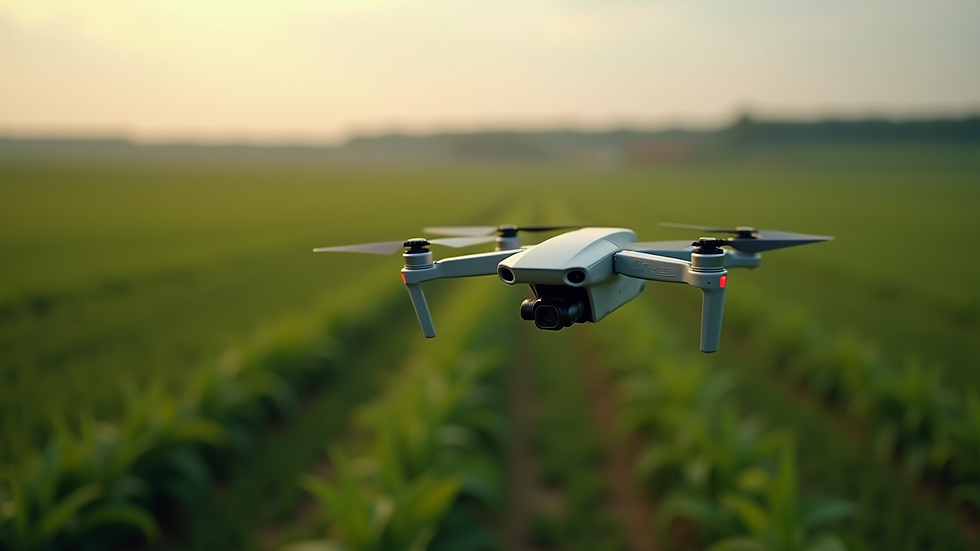
At a mixed farm in Gloucestershire, smart tools have changed the rhythm of work. Drones and crop sensors handle field scouting, while managers spend more time interpreting data and planning interventions. It’s not about replacing people — it’s about retraining them. The next generation of rural workers will need skills that are both digital and mechanical — a powerful opportunity for farm engineers, colleges, and local workshops.
🌍 Beyond the UK: A Global Undercurrent
Internationally, the same grassroots innovation is happening:
Brazil has just granted a patent for a new bio-enriched fertiliser process.
India and Brazil are collaborating under the Maitri 2.0 partnership to develop low-cost farm technologies.
These projects share one philosophy:
Agritech doesn’t have to be high-cost to be high-impact.
⚙️ Rural Rebellion’s View
Rural Rebellion believes the next wave of agritech belongs to the tinkerers, trainers, and toolmakers — the farmers who weld sensors onto seed drills, the engineers who design implements that fit through old gates, and the educators who turn complex dashboards into practical, field-ready knowledge. If “Farming is the first and final technology,” then our mission is to ensure that technology remains in farmers’ hands.
What Comes Next
Over the coming months, Rural Rebellion will profile workshops, farms, and innovators who are proving that:
Small-scale doesn’t mean small-minded — it means agile, inventive, and deeply rooted in place.
If you’re running a project, trialling a new tool, or building something useful for the land, we’d love to hear from you. 📩 Email: contact@ruralrebellion.co.uk
The Future of Agritech in Rural Communities
As we look ahead, the future of agritech in rural communities seems bright. Innovations are not just about technology; they’re about people. They’re about farmers who are willing to adapt and learn. They’re about engineers who understand the land and its needs.
Embracing Change
Change can be daunting. But it can also be exhilarating. Embracing new technologies can lead to better yields, healthier soils, and more sustainable practices. Imagine a future where every farmer has access to the tools they need to thrive.
Building Resilience
In a world facing climate change and economic uncertainty, resilience is key. By adopting smart technologies, farmers can build resilience into their operations. This means being able to respond to challenges quickly and effectively.
Community Collaboration
Collaboration is essential. Farmers, engineers, and educators must work together to share knowledge and resources. This community spirit can drive innovation and ensure that everyone benefits from advancements in agritech.
Conclusion
In conclusion, the landscape of agritech is changing. It’s not just about high-tech solutions; it’s about practical, affordable innovations that empower farmers. As we move forward, let’s keep the conversation going. Together, we can reshape the rural landscape for a resilient future.
📚 Sources (2025)
UK Agri-Tech Centre — Building Soil-Smart Agriculture in the UK
UKRI / Innovate UK — AgriScale Manufacturing Pilot
DEFRA — Farming Innovation Programme
University of Gloucestershire — Smart Farming and Work Transformation
Farmonaut — Precision Agriculture in Lincolnshire


Comments