.jpeg)
2025: A Year of Revelation for British Agriculture
- Steve

- Dec 26, 2025
- 5 min read
Updated: Feb 2
Farming, once again, proved itself to be both the first and final technology.
The year 2025 will be remembered as one of the most revealing periods for British agriculture in decades. It wasn’t a year of dramatic revolutions but rather one of exposure: exposure of policy fragility, climate realities, and the undeniable importance of farmers to the UK’s economic, environmental, and social stability. From Westminster to waterlogged fields, from AI-powered tractors to public protests over farm inheritance tax, agriculture found itself squarely back in the national conversation.
This is what actually happened.
Politics Comes to the Farm Gate
Few years have demonstrated the political sensitivity of agriculture quite like 2025.
The Inheritance Tax Flashpoint
The most explosive issue was the government’s attempt to reform Agricultural Property Relief. Initial proposals would have exposed many family farms to inheritance tax liabilities that could only realistically be paid by selling land. The reaction was immediate and fierce:
Protests erupted across rural England.
Farming organisations mobilised at speed.
MPs in marginal rural seats panicked.
The eventual government climbdown — raising thresholds and softening reforms — sent a clear signal: farming still has political weight, but only when it speaks loudly and collectively. However, this episode left lasting damage. Trust between farmers and policymakers — already strained — was further eroded.
Subsidies After Brexit: Less Certainty, More Conditions
By 2025, the shift away from the Basic Payment Scheme was no longer theoretical; it was a lived reality. Environmental Land Management schemes (SFI, Countryside Stewardship, and Landscape Recovery) became the backbone of farm support. This replaced income stability with conditional payments tied to environmental outcomes.
For some farmers, this worked:
Mixed farms and smaller holdings adapted well.
Soil-focused and low-input systems benefited.
For others, especially intensive livestock and arable operations, the transition remained financially uncomfortable. The lesson of 2025 was clear: policy ambition is running ahead of practical delivery, and many farms are being asked to absorb risks the state no longer wants to carry.
Animal Welfare Moves from Debate to Direction
Another defining development was the government’s renewed commitment to animal welfare reform. Plans to phase out:
Enriched cages for laying hens.
Farrowing crates for pigs.
This marked a decisive policy shift. While broadly supported by the public, these changes come with real costs — capital investment, reduced stocking densities, and system redesign. The central tension remains unresolved: higher welfare without guaranteed market returns.
2025 showed that welfare legislation is now politically inevitable, but economic realism still lags behind moral ambition.
Climate Reality Hits Yields, Not Just Headlines
Climate change stopped being an abstract future risk in 2025. It arrived in the form of poor harvests, drought stress, and water insecurity.
Dry spring conditions affected cereal establishment.
Summer heat reduced yields and quality.
Livestock farms faced grass growth volatility.
Perhaps most critically, water availability emerged as a strategic weakness. Reservoirs, abstraction licences, and on-farm storage became hot topics as farmers struggled with infrastructure designed for a more predictable climate. The message from the land was blunt: resilience is no longer optional.
Technology Steps In — Quietly
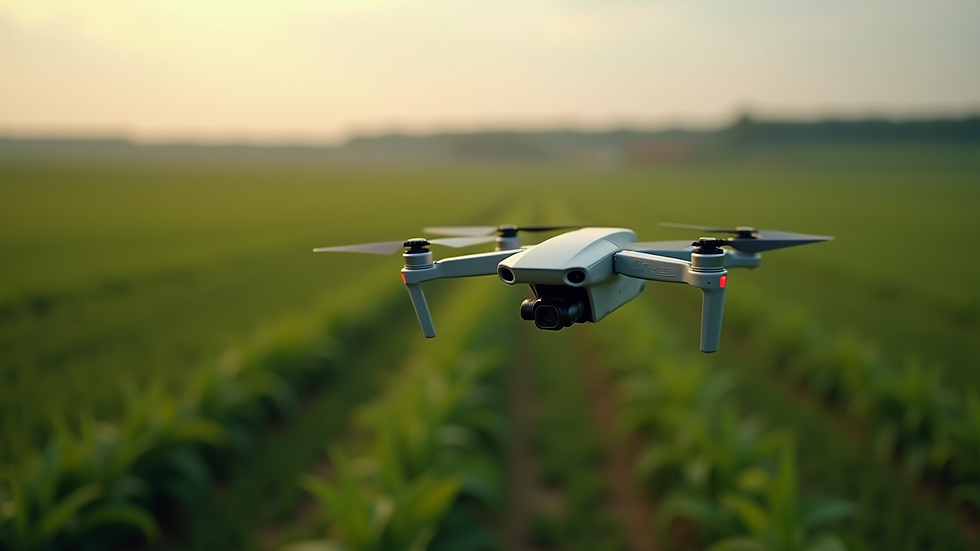
Despite the challenges, 2025 was not a year of stagnation. Adoption of precision agriculture tools continued steadily:
GPS-guided machinery.
Variable-rate input application.
On-farm sensors and data platforms.
AI did not replace farmers; it increasingly augmented decision-making, especially in livestock monitoring, compliance management, and input efficiency. Government-backed innovation funds and trials supported this shift, though access remained uneven. The digital divide between large and small farms persisted, raising uncomfortable questions about who the future food system is really being designed for.
Regenerative Farming Moves into the Mainstream
If one idea truly crossed the threshold in 2025, it was regenerative agriculture. Once dismissed as niche or ideological, practices such as:
Cover cropping.
Reduced tillage.
Integrated livestock.
Soil carbon management.
These became embedded in both policy incentives and commercial thinking. Banks, insurers, and processors increasingly viewed soil health as a risk management issue, not just an environmental one. That shift — quiet but profound — may prove more important than any single subsidy scheme.
Public Trust in Farmers Rebounds
While farmers often felt under siege, public sentiment moved in the opposite direction. Consumer research in 2025 showed:
Rising trust in British farmers.
Strong support for domestic food production.
Increased concern about food security.
In a world of fragile supply chains and geopolitical instability, the public rediscovered a basic truth: you cannot outsource food sovereignty. This renewed trust represents an opportunity — but only if farmers are allowed to capture value, not just goodwill.
What 2025 Really Tells Us
UK agriculture in 2025 was not broken — but it was stretched. The year revealed:
A political system that underestimates farming until it revolts.
A climate that no longer plays by historic rules.
A sector adapting faster than its critics realise.
Above all, it reinforced a fundamental reality:
Farming is not a problem to be managed — it is infrastructure.
As Britain debates energy, housing, defence, and AI, the quiet lesson of 2025 is this: none of it works without a functioning agricultural system beneath it. The future of farming will not be decided by slogans or schemes alone but by whether farmers are trusted, equipped, and allowed to remain economically viable while doing the work society increasingly demands of them.
Embracing Innovation for a Resilient Future
As we look ahead, it’s clear that innovation will play a crucial role in shaping the future of agriculture. The integration of cutting-edge technologies and sustainable practices can help us navigate the challenges that lie ahead.
The Role of AI in Agriculture
AI is not just a buzzword; it’s a tool that can transform the way we farm. By leveraging data and analytics, farmers can make informed decisions that enhance productivity and sustainability. Imagine a future where AI helps us predict weather patterns, optimize resource use, and improve crop yields. This isn’t just a dream; it’s becoming a reality.
Sustainable Practices for Long-Term Success
Sustainability is not just a trend; it’s a necessity. By adopting practices that protect our environment, we can ensure that future generations inherit a thriving agricultural landscape. Techniques like crop rotation, cover cropping, and reduced chemical use are not only beneficial for the planet but can also improve farm profitability.
Community Engagement and Support
Building strong connections within our communities is vital. By engaging with local consumers and educating them about the importance of supporting British agriculture, we can foster a sense of shared responsibility. This is where the phrase support local farmers becomes more than just a slogan; it’s a call to action that can drive real change.
The Future of Agriculture: A Collective Journey
Looking ahead, the path for agriculture is not just about individual farmers or specific technologies. It’s about a collective journey. Farmers, policymakers, and consumers must work together to create a sustainable and resilient agricultural system.
Policy Support for Innovation
Policymakers need to understand the realities of farming today. They must support innovation through funding and resources. This means creating policies that not only protect farmers but also encourage them to adopt new technologies and practices.
Education and Training for Farmers
Education is key. Farmers must have access to training that helps them understand and implement new technologies. Workshops, online courses, and community programs can bridge the knowledge gap and empower farmers to thrive in a changing landscape.
Consumer Awareness and Action
Consumers play a crucial role in this journey. By choosing to buy local and support sustainable practices, they can drive demand for responsible farming. Awareness campaigns can help consumers understand the importance of their choices and how they impact the agricultural landscape.
Conclusion: A Call to Action
In conclusion, 2025 was a year of revelation, not just for farmers but for all of us. The challenges we face are significant, but so are the opportunities. By embracing innovation, prioritizing sustainability, and engaging with our communities, we can reshape the future of agriculture for a resilient and prosperous tomorrow. Together, let’s build a future where farming thrives, communities flourish, and the land is respected.


Comments